Public broadcasters exist in many democracies. Britain has the BBC. The United States has PBS and NPR. Canada has the CBC. The idea behind these institutions is simple: provide journalism that is independent of corporate interests and serves the public good. But there’s an unavoidable tension built into that model. When a news organization receives the majority of its funding from the government it covers, can it truly remain independent? That question has been debated in Canada for decades.
The Funding Reality
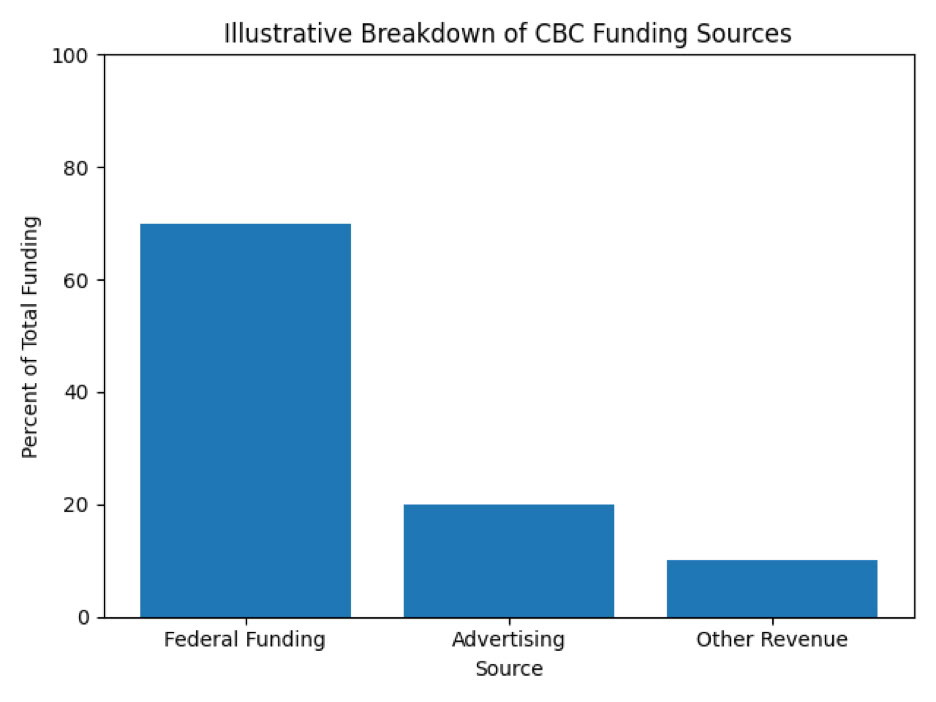
The CBC receives roughly $1.2–$1.4 billion annually in federal funding, making it one of the most heavily publicly funded media organizations in the world on a per-capita basis. While CBC executives maintain that editorial decisions are independent, the structure itself creates an inherent pressure point: the government controls the budget. In theory, Parliament funds the broadcaster. In practice, the governing party proposes the funding level. That distinction matters.
What the Homepage Reveals
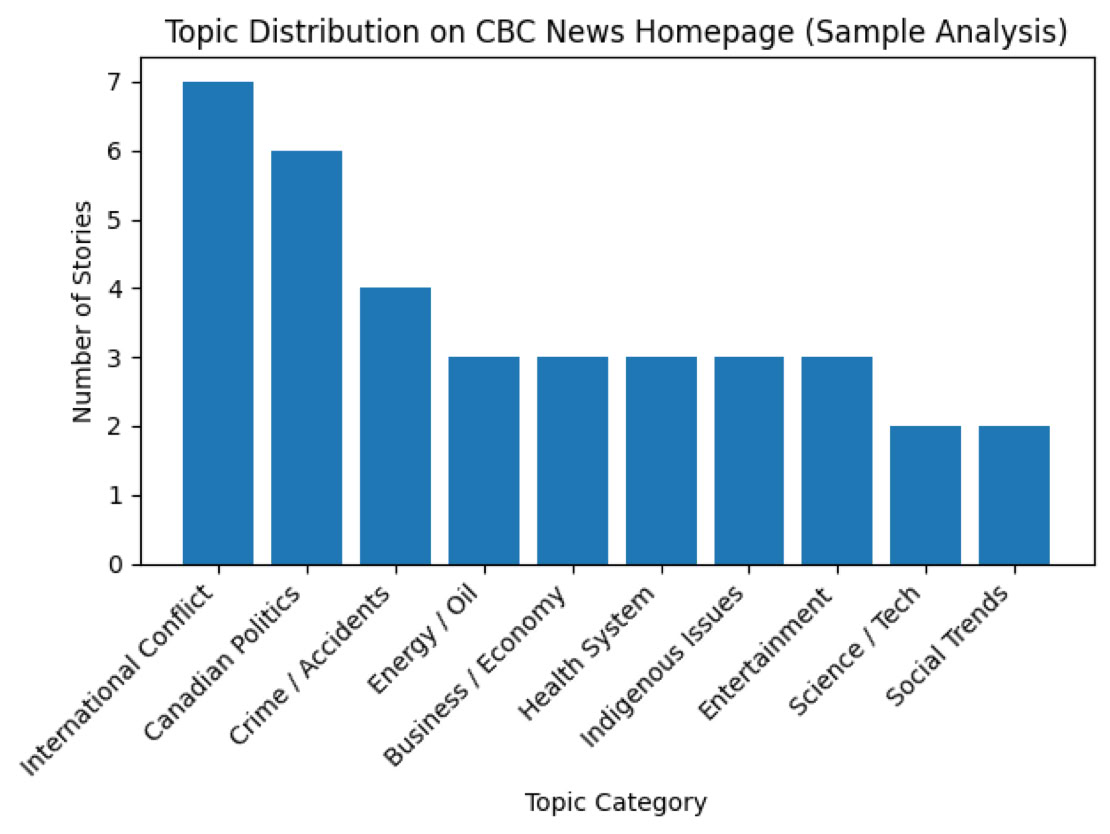
A recent look at the CBC News homepage provides a revealing snapshot of editorial priorities. The most prominent story was political analysis of the relationship between Prime Minister Mark Carney and Conservative leader Pierre Poilievre. Not an international crisis. Not an economic shock. Not an investigative report.
Domestic political framing occupied the most valuable real estate on the page. Meanwhile, major global events — including the expanding conflict involving Iran and Israel — were present but distributed across lower sections of the site. That editorial decision matters because homepage placement is not random. Editors understand that readers focus primarily on the top-left portion of the page. What appears there is what the newsroom considers most important.
Framing the Narrative
Another pattern appears when headlines are categorized by topic. A large portion of stories focus on:
• social crises
• crime and tragedy
• health system stress
• global conflict
At the same time, government policy stories often appear as analysis pieces explaining political strategy rather than investigative reporting scrutinizing decisions. This kind of framing subtly positions government leaders as the actors responding to events rather than the institutions responsible for policy outcomes. Again, this is not unique to CBC. Many large news organizations follow similar patterns. But when the broadcaster is publicly funded, the implications deserve scrutiny.
What Critics Have Said
Criticism of CBC’s editorial independence is not new. Former journalists, politicians, and media analysts from across the political spectrum have raised concerns over the years. Some of the most common critiques include:
• an editorial culture centered in Ottawa and Toronto
• reliance on government sources for political reporting
• perceived ideological uniformity within newsrooms
Even internal reviews have occasionally acknowledged challenges in maintaining public trust. In 2023, for example, CBC temporarily paused activity on the platform X (formerly Twitter) after the site labeled the broadcaster as “government-funded media.” The move itself became a national debate about how the CBC should be classified.
Comparing Public Broadcasters
Canada’s situation is somewhat unusual internationally. The BBC receives public funding, but it is financed through a television licence fee paid directly by households, not annual government appropriations. PBS in the United States receives only a small portion of its funding from the federal government, relying primarily on private donations and foundations. CBC sits somewhere in between — heavily government funded, but also competing in the commercial media market. That hybrid structure can blur its institutional identity. Is it a public service broadcaster? A state-supported media outlet? Or a commercial competitor to private networks? The answer depends on who you ask.
The Real Issue
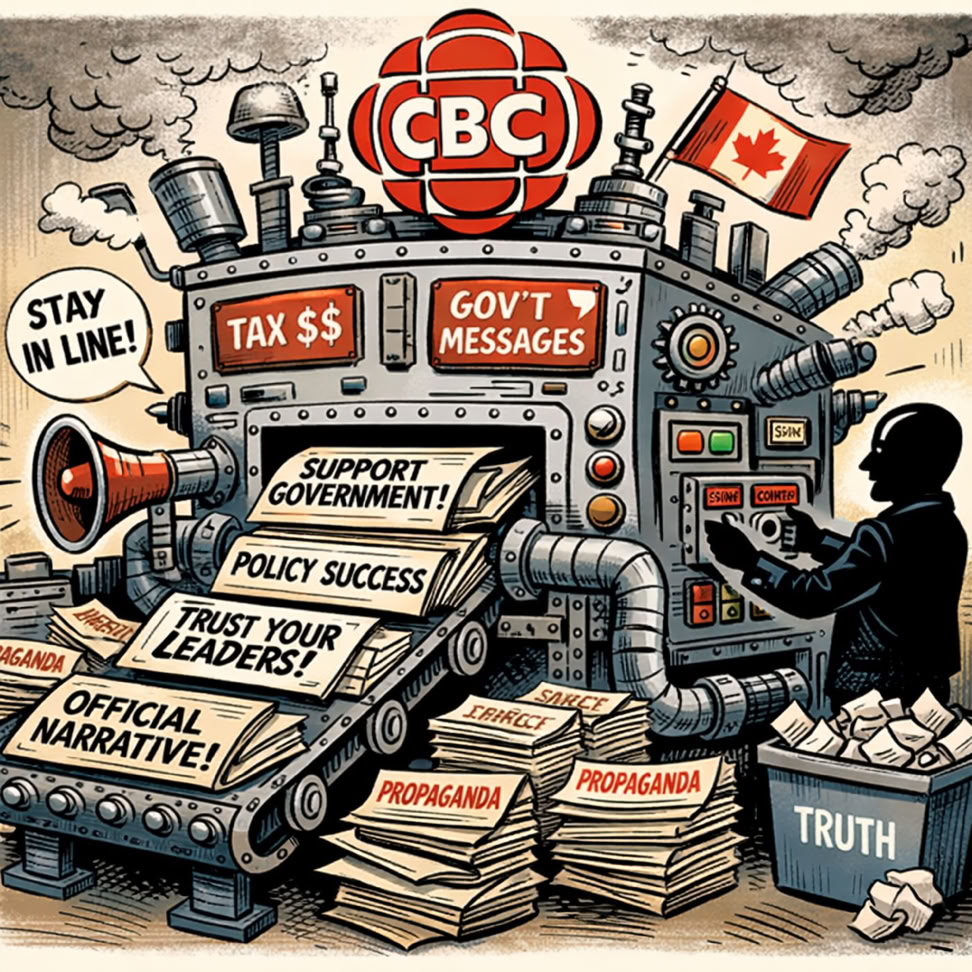
None of this means CBC journalists are intentionally producing propaganda. Most reporters are professionals committed to their craft. But institutions shape behaviour. Funding structures, newsroom culture, and editorial incentives all influence what stories get told and how they are framed. Over time, those forces can create a narrative environment that aligns closely with the priorities of political power. Not through conspiracy. Through structure.
A Question Worth Asking
Public broadcasting can be valuable in a democracy. But it requires constant scrutiny to ensure it remains truly independent. When a broadcaster is funded by the government, focuses heavily on government narratives, and competes with private media in the same market, Canadians should at least ask the question: Is the CBC serving the public — or the system that pays for it?
That debate is long overdue.